
It is a habit that many are used to until it becomes challenging. If you are an older person who is recovering from illness, who is living in a wheelchair, coping with disabilities, or experiencing weak spots, taking a shower and getting out the bath could be among the most difficult moments of the day.
This is the place where bathing assistance for homes for home care could make a huge difference.
Bathing assistance is a kind or personal service that a qualified caregiver assists a person maintain good hygiene, while ensuring their privacy, dignity, comfort and security. Based on the individual’s needs and the care plan they have, assistance could include cleaning the bathing area, aiding with transfers, giving the bathing assistance that is hands-on drying, dressing and even basic grooming.
Families, having bathing aid can give security. For people who are older or in need of medical care, it could assist them to remain at ease and secure while they continue to remain at home in a safe manner.
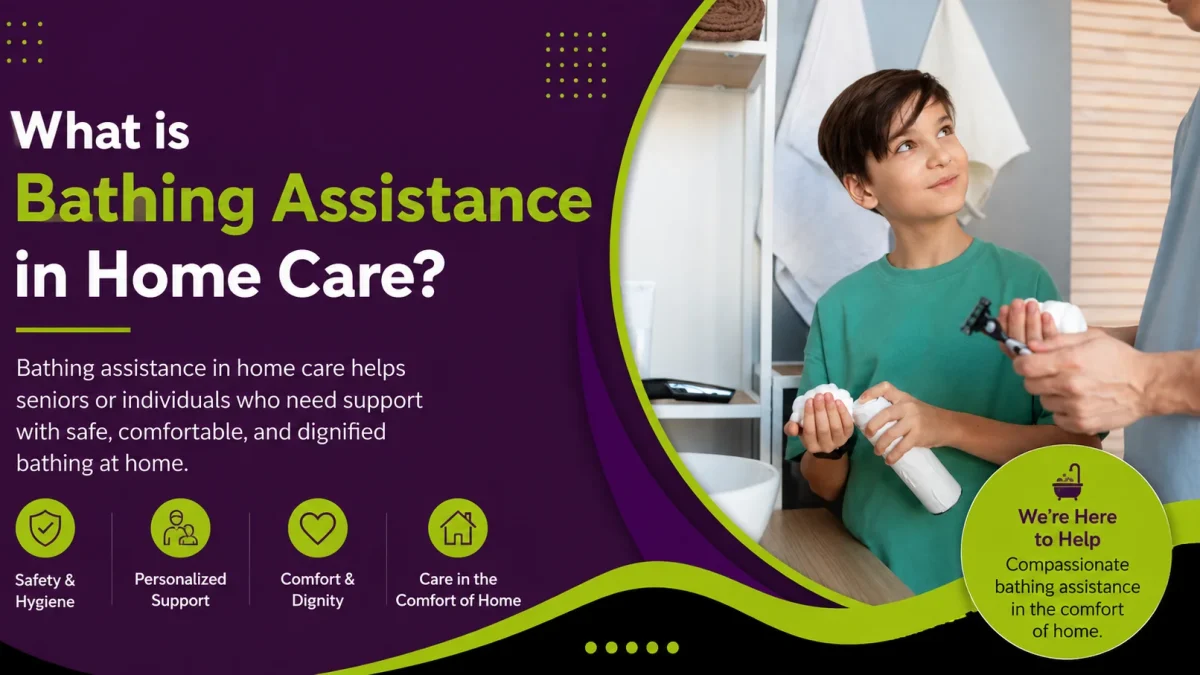
What Is Bathing Assistance in Home Care?
Bathing assistance at home care is receiving assistance with washing and personal hygiene from the at-home comforts of your home.
A caregiver can assist someone who is having difficulty bathing independently. The level of assistance could vary from basic supervision to more intensive assistance, based on the individual’s strengths and preferences as well as the plans for care.
Assistance with bathing may comprise:
- Making your bathroom as well as bathing accessories
- Assisting the person to get into or out of the tub or shower
- Supporting transfers during transfer
- Assisting in bathing and washing
- Helping to dry
- Helping to dress after showering
- Aiding in basic hygiene and grooming
- Examining potential safety concerns for
- Encourage independence wherever feasible
The objective isn’t to deprive a person of their independence. Instead, a high-quality home care should provide an appropriate amount of help but allowing the person to accomplish as much as they are able to safely independently.
Why Do Seniors Need Bathing Assistance?
As we age, our daily activities become more physical. Alterations in balance strength as well as flexibility, vision or coordination can make bathing more difficult.
Many seniors also may experience difficulties related to:

Limited Mobility
The conditions that hinder movement could cause difficulty in stepping into a tub or standing up in a shower. The caregiver can offer the suitable assistance according to the needs of the individual.

Weakness or Fatigue
Anyone recovering from surgery, hospitalization, illness or other health conditions can become exhausted quickly. Assistance can make bathing easier for those who are physically challenged.

Balance Difficulties
Slippery floors and wet floors could increase the chance of falling off balance. The assistance of a caregiver can assist a person to navigate the routine of bathing more safely.

Memory-Related Challenges
Individuals with cognitive impairment may require reminders or supervision for their individual hygiene routines.

Disability or Physical Limitations
A person who has physical disabilities may require assistance when bathing, dressing, transfers or any other aspects that are necessary for daily living.

Recovery After Hospitalization
After a return home from the hospital, patients might need to be supported by personal care, while gaining energy and confidence.
What Does a Caregiver Do During Bathing Assistance?
Bathing assistance goes beyond just helping one person to wash. A skilled caregiver takes care of personal hygiene by using patience and respect, as well as communication and respect.
Bathing Assistance in comparison to. Independent Bathing
ome people who get bathing assistance require full-time, hands-on assistance.
There are various degrees of assistance.
Who Needs Home Health Care?
Home health care is ideal for seniors, individuals recovering from surgery or illness, people living with chronic conditions, and anyone needing professional medical or personal support while remaining safely at home.
Supervision
Certain people are physically able to bathe but may benefit from having an adult nearby to provide reassurance and surveillance of safety.
Standby Assistance
The caregiver is always close by and offers assistance when needed, while also encouraging the person to accomplish as much of their routine as they can on their own.
Partial Assistance
The individual is able to complete certain bathing chores on their own and the caretaker assists in specific tasks.
Hands-On Assistance
The level of care required is determined by the individual's capabilities, the individual's safety needs, their preferences and an established treatment plan.
The Emotional Importance of Bathing Assistance
Bathing isn’t just an exercise in physical form. It could also be an experience of emotion.
Imagine a senior woman who was a mother for decades, caring for her family as well as taking care of the household of her own. Following a health issue the woman suddenly finds herself struggling to stand while showering.
In the beginning, she is resistant to assistance.
She is ashamed.
The mother tells the daughter “I can do it myself.”
Her daughter understands. She also understands that the shower is now an extremely risky aspects of her mother’s daily routine.
With the help of a caring home caregiver The experience is transformed. Instead of feeling like she is in control, she receives the kind of care she deserves, allowing her to continue her daily routine at her home.
With time the fear diminishes.
The caregiver is aware of her preferences and respects her privacy as well as encourages her complete the tasks she is able to comfortably manage on her own.
This is among the main advantages of the personal caregiver at home Assistance does not necessarily mean sacrificing the freedom to live independently.
Who Can Benefit From Bathing Assistance?
Several h
Bathing assistance is a good option for those who struggle with managing their personal hygiene on their own.
This may comprise:
- Seniors who are aging in their homes
- Adults with disabilities
- People who have limited mobility
- Patients recovering from surgery
- Patients who have recovered from hospitalization
- People who experience fatigue or weakness.
- Individuals who require assistance with the activities of daily living
- Individuals who require additional personal assistance
- Families looking for additional assistance for an elderly loved one
An assessment by a professional can assist in determining the right kind and amount of support.
ealthcare professionals may recommend home health care.
This includes:
- Primary physician
- Hospital discharge planners
- Specialists
- Rehabilitation centers
- Family members
- Patients themselves
Numerous agencies also offer free home assessments.
How to Make Bathing Safer at Home
Alongside caregiver support Families can think about ways to improve bathing space.
How to Know When a Loved One May Need Bathing Assistance
Families could notice indicators that bathing has become difficult.
For instance:
- The person is not able to bathe.
- They appear nervous when they enter the shower.
- They may need assistance getting into and out of tub
- They have to fight to stand for long time
- They are unable to reach certain areas.
- They often get tired while providing personal medical
- They’ve had issues in securing the bathroom
- Their routine for hygiene has changed
- The majority of them rely on their family members for personal support
A single sign does not necessarily mean that professional assistance is needed. However, multiple changes might indicate that further support might be beneficial.
Choosing the Right Home Care Provider for Bathing Assistance
When searching for bathing aid for older adults families, they should think about more than the accessibility.
Find a home health provider that focuses on:
Compassionate Care
Caregivers must treat each client with respect and patience.
Personalized Support
Each person has their own unique capacities, routines as well as preferences and requirements.
Dignity and Privacy
The care of a person requires trust. The caregiver must respect the boundaries of the client and their preferences.
Safety-Focused Care
The care provider should be equipped with the right procedures to assist clients with their personal care and mobility requirements.
Communication
A good communication between caregivers, customers, and family members can ensure that the care provided remains continuous and prompt.
Bathing Assistance From Love One Home Healthcare
In Love One Home Healthcare we understand that personal care involves much more than just performing an everyday task. It’s about making people feel secure, valued and comfortable by their family at home.
The personal care services are able to assist clients who have daily needs, as well as encourage independence at any time.
We also offer a full assortment of home healthcare services that include:
- Companion Services
- Personal Care
- Skilled Care
- Live-In Care
- Pediatric Care
- Home Infusion Therapy Service
- Physical & Speech Therapy
- Healthcare Staffing Service
- Healthcare Training
No matter if a loved one requires periodic assistance or continuous support or care at home, individualized home care can assist families in creating a care schedule that is appropriate to their needs.
Trusted In-Home Care Is Just a Call Away
Don’t wait until everyday challenges become emergencies. Our compassionate caregivers deliver reliable home health care designed to improve quality of life while helping your loved one remain safe, comfortable, and independent at home.
Benefits of Home Health Care
Whether you’re exploring care options for a family member or planning for future healthcare needs, knowing who can benefit from home health care helps you make informed decisions. Below are the most common individuals who may require professional home health services to maintain their health, safety, and overall well-being.
- Seniors Aging in Place
- Individuals Recovering After Surgery
- Patients with Chronic Illnesses
- People Recovering from Serious Illness
- Individuals Living with Disabilities
- Alzheimer’s & Dementia Patients
- Stroke Recovery Patients
- Individuals Needing Rehabilitation
- Patients Requiring Skilled Nursing Care
- Individuals Receiving Palliative Care
- Family Caregivers Needing Respite Support
- People with Limited Mobility
Every person’s healthcare journey is unique, which is why professional home health care is designed to meet individual needs with compassion and flexibility. From medical support and rehabilitation to personal care and companionship, the right services can significantly improve daily living while allowing individuals to remain in the comfort of their own homes.
Frequently Asked Questions
Does home health care just cater to seniors?
No. Health care in the home assists people of all ages who are recovering from surgery, illness or injury, disability or chronic medical issues.
Can home health care replace nursing home care?
In most instances the majority of cases, there is a. Patients who are stable in their medical condition usually receive full support at home rather than being moved into a center.
What are the services included?
Services can include therapy, skilled nursing and medical management, personal care and companionship, meal preparation transportation, as well as the monitoring of chronic illness.
How often are caregivers allowed to visit?
The schedules vary from a few hours per week, to full-time, night or 24 hour care, based on your individual requirements.
Does home health care coverage get insured by insurance?
The coverage varies based on the insurance plan, Medicare eligibility, physician prescriptions, and the kind of service needed.
Are caregivers certified?
The most reputable agencies employ trained certified, and screened nurses, caregivers, and therapists who are licensed and meet certification requirements.
Can services be customized?
Absolutely. The care plans are customized to each person’s individual health conditions preferences, lifestyle, and timeframe.
How can I begin?
The majority of agencies start with a consultation or an in-home assessment to assess your needs and design a custom treatment plan.
How can I tell whether my loved ones requires medical care at home?
The warning signs are accidents and medication errors, difficulty in everyday activities, poor diet, loss of memory or frequent hospital visits.
Do family members continue to take care of you?
Yes. Professional caregivers assist family members and provide assistance and respite as needed.