
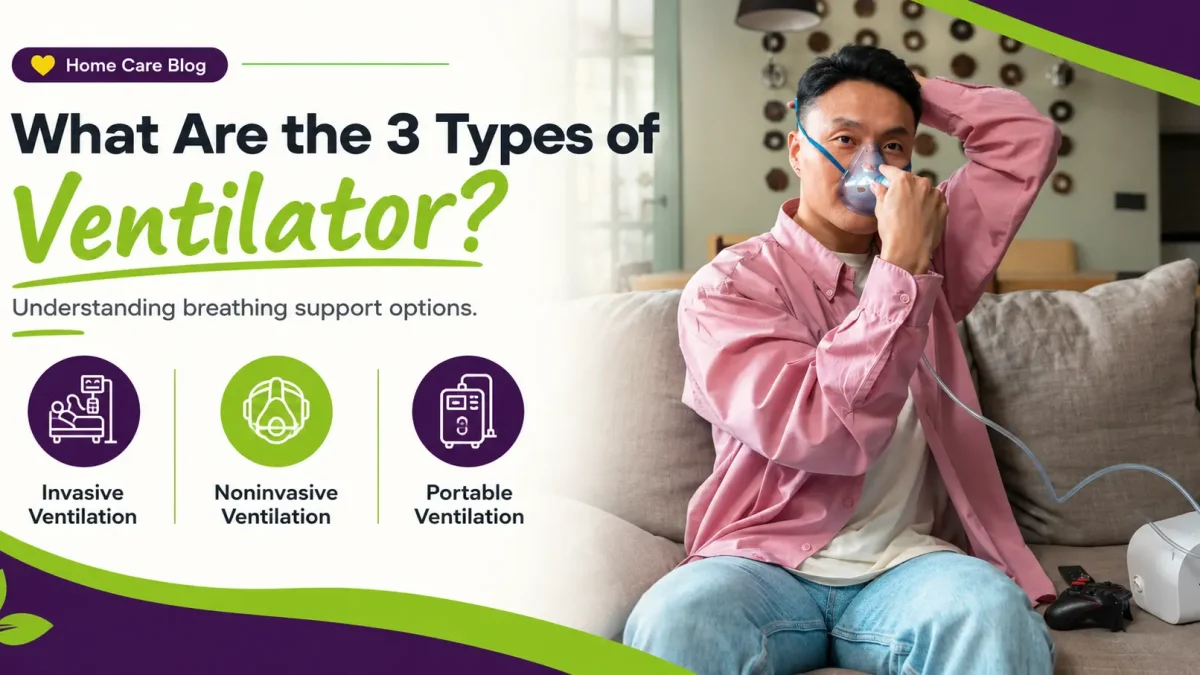
When a loved one has trouble breathing, it can be frightening and confusing. A ventilator can help ensure they get the oxygen they need. As a family, being educated on the different types of ventilators can help better understand your loved one’s treatment and navigate conversations with medical providers.
That’s why at Love One Home Healthcare, we believe it’s always good to know what the options are for ventilators. Whether your loved one needs temporary or long-term assistance, it is helpful to have the information when making your medical care decisions in the hospital or at home.
At Love One Home Healthcare, we understand that every patient and family has unique healthcare needs. Our goal is to help families explore personalized home healthcare options and understand the support that may be available for their loved ones.
What Is a Ventilator and How Does It Work?
A ventilator is a machine that helps or takes over for patients who are having trouble breathing on their own. It may help move air and oxygen into the lungs and get rid of carbon dioxide. Sometimes, a ventilator can reduce how much work it takes to breathe. The type and amount of help a patient needs will be determined by their doctor and medical team. The National Heart, Lung, Blood Institute (NHLBI) has more information.
What Are the 3 Main Types of Ventilators?

A lot of the time, ventilators are categorized in different ways. Usually there are three categories:
- Intensive Care Unit (ICU) ventilators
- Transport ventilators
- Home ventilators
What Is a Ventilator and How Does It Work?
A ventilator is a machine that helps or takes over for patients who are having trouble breathing on their own. It may help move air and oxygen into the lungs and get rid of carbon dioxide. Sometimes, a ventilator can reduce how much work it takes to breathe. The type and amount of help a patient needs will be determined by their doctor and medical team. The National Heart, Lung, Blood Institute (NHLBI) has more information.
What Causes a Person to Need a Ventilator?
A doctor may decide to place a patient on a ventilator if they are unable to breathe adequately for themselves. There are several reasons for this, including:
Having a lung infection like pneumonia
Having a lung disease like chronic obstructive pulmonary disease (COPD)
Having a neuromuscular disease or injury, such as muscular dystrophy or a spinal cord injury
Having had surgery or a serious accident
Having severe lung failure
Who Might Need One of These Ventilators?
Any patient whose doctor determines that they need assistance with breathing may benefit from any of these ventilators.
Families caring for someone with complex medical needs may benefit from exploring professional home healthcare services. Depending on individual needs and service availability, support may include personal care, skilled care, pediatric care, and assistance with daily routines.
Who Needs an ICU Ventilator?
An ICU ventilator may help critically ill patients who need breathing assistance while they are in the hospital.
Doctors often prescribe ICU ventilators to patients having surgery, those with lung conditions, or those with lung failure following an accident. An ICU ventilator may also be prescribed for patients with neurological conditions who are unable to breathe independently.
What Are the Features of an ICU Ventilator?
A ventilator prescribed for an ICU typically has a variety of modes and settings to best suit the patient’s needs.
An ICU ventilator often has alarms to alert staff of certain issues. It also typically has features to monitor the patient’s breathing, oxygen levels and other vital signs. Many ICU ventilators are capable of providing both invasive and noninvasive ventilation. Some ICU ventilators have the capability of transporting the patient while still providing ventilator support.Example: Imagine a patient is admitted to the hospital and diagnosed with severe pneumonia. The infection is preventing their lungs from providing them with enough oxygen, so they need additional ventilator support while receiving antibiotics. The doctor determines that the patient should be placed on an ICU ventilator.
While they are in the hospital, the doctor and nurses keep a close eye on their condition and determine when they can be taken off the ventilator.
Who Needs a Transport Ventilator?
A transport ventilator may be used to provide ventilator support while a patient is being transferred to another hospital or ICU. Some transport ventilators are specifically designed to be used while a patient is being moved.
A transport ventilator may also be used in cars, on ambulances or other vehicles. Some models can run on batteries to provide support while moving and can also withstand the forces of transport.
Who Needs a Transport Ventilator?
A transport ventilator may benefit patients who require mechanical ventilation while being moved, such as between hospitals or during ambulance rides.
What Are the Features of a Home Ventilator?
Example: Imagine a child is diagnosed with a disease that causes them to have trouble breathing. The doctor determines the child needs to be on a ventilator so they can receive the oxygen they need. The doctor and parents decide the child can receive ventilator support at home and they set up a home ventilator program to ensure the child receives the treatment they need. With the help of their caregivers, the parents are able to make sure the child receives the ventilator support they need while living their everyday lives.
Children who require ongoing medical support may have unique developmental, clinical, and family-care needs. Learn more about our pediatric home healthcare options and discuss appropriate care arrangements with qualified healthcare professionals.
What Is Invasive Ventilation?
Invasive ventilation typically involves inserting a breathing tube through the mouth or a surgically-created opening in the front of the neck (tracheostomy).
A tube may also be inserted through the mouth or nose into the windpipe (trachea). Invasive ventilation may be used if the patient requires significant ventilator support or cannot tolerate noninvasive ventilation.
What Is Noninvasive Ventilation?
Noninvasive ventilation typically uses a mask that goes over the nose and/or mouth to provide ventilator support. It does not involve inserting a breathing tube into the trachea.
Noninvasive ventilation may reduce the patient’s breathing efforts and provide ventilator support while they sleep. Continuous positive airway pressure (CPAP) and bilevel positive airway pressure (BiPAP) are two common types of noninvasive ventilation. However, not all noninvasive devices are considered ventilators. The doctor will determine the best method for patients who need noninvasive or invasive ventilation. Cleveland Clinic has more information.
How Do Doctors Choose Which Ventilator to Use?
There is not a one-size-fits-all ventilator. Doctors will consider a number of variables before determining which ventilator is best for the patient.
What Should Families Know About Caring for Patients Who Need Ventilators at Home?
Once a patient has received ventilator support in the hospital, they and their families may feel relief that they are returning to the comfort of their own home. However, they may also feel apprehensive about caring for them when they have a ventilator.
Before returning home, patients and their families should understand how to care for the patient and know what to expect. Here is a list of things to know:
Training: Caregivers should be trained to perform the tasks necessary for the patient to receive appropriate ventilator support.
How Do I Access Home Ventilator Care?
The experts at Love One Home Healthcare understand it is important for patients and their families to receive comprehensive care. Your home healthcare needs will be determined by your doctor and care team based on your condition and medical needs.
Here are the types of services offered by Love One Home Healthcare:
Companion Services
Personal Care
Skilled Care
Live-In Care
Pediatric Care
Home Infusion Therapy Service
Healthcare Staffing Service
Healthcare Training Service
Families exploring respiratory support at home should understand the importance of individualized care planning, trained professionals, and emergency preparedness. Learn more about ventilator care at home and contact Love One Home Healthcare to confirm which services are available for your family’s needs.
What Home Ventilator Services Does Love One Home Healthcare Offer?
We know how important it is for patients and their families to receive proper care. Depending on the patient’s needs, a nurse, respiratory therapist or other skilled provider may be needed for ventilator or respiratory care. The doctor will determine if ventilator care is required and what level of care is appropriate for the patient. The doctor or nurse will discuss the ventilator care with the patient and their caregivers and explain what to expect during the care. The caregivers must be aware of any specific needs or instructions related to the ventilator care.
Love One Home Healthcare is prepared to help patients and their caregivers understand and manage ventilator care. Our trained and compassionate caregivers can help patients maintain their independence at home while ensuring they receive the care they need. We understand how important it is for patients and their caregivers to receive the care they need in the comfort of their own home.
If you or a loved one need home healthcare, we can help you create a care plan that is most appropriate for your needs. Our caregivers can help patients continue to live their everyday lives while receiving the care they need.
What Home Ventilator Care Options Are Available?
Patients’ ventilator care: needs often change throughout the day. Caregivers should be trained to address the patient’s needs. Here is a list of things to know:
The patient’s condition: The patient and caregivers should understand the patient’s condition and how it may affect their ventilator care needs.
The care plan: The patient and caregivers should understand the care plan so they know what to expect. The care plan may change depending on the patient’s condition.
The patient’s needs: The patient and caregivers should understand the patient’s needs and be able to address them if they arise.
What Are the Benefits of Caregiver Assistance at Home?
Having caregiver assistance at home can help patients live independently in their own home. Caregivers can help patients with everyday tasks and assist them in maintaining their usual schedule. Additionally, caregivers can help patients’ families by giving them an opportunity to take breaks and do things they enjoy.
The doctor will determine if a caregiver is needed and what their responsibilities should be based on the patient’s needs. The caregiver can help the patient with tasks related to their ventilator care, such as adjusting the ventilator, providing suctioning, and other duties. The patient and families should know the limitations of the caregiver’s job description.
Caregivers are often trained to respond to a variety of patient needs. The caregiver should understand the patient’s unique situation and know how to address ventilator-related concerns.
How Do I Coordinate Ventilator Care at Home?
The patient, family and doctor will determine the most appropriate treatment plan. The patient and family should understand the treatment plan so they know what to expect. The patient and caregivers should understand the ventilator care instructions to ensure the patient is receiving the ventilator support they need.
Communication between the patient, their family, doctor and caregivers can help improve the coordination of patient care. The doctor will determine the patient’s care needs and the type of ventilator care they may benefit from. The doctor or nurse will advise the patient and caregivers on what to expect and how to receive the appropriate ventilator care. The provider can also help address the patient and caregivers’ concerns related to the care.
Important: Ventilator-specific nursing or respiratory care should only be provided if the agency is authorized and qualified to provide it. The patient and caregivers should speak directly with the agency about the availability of specialized nursing or respiratory services.