
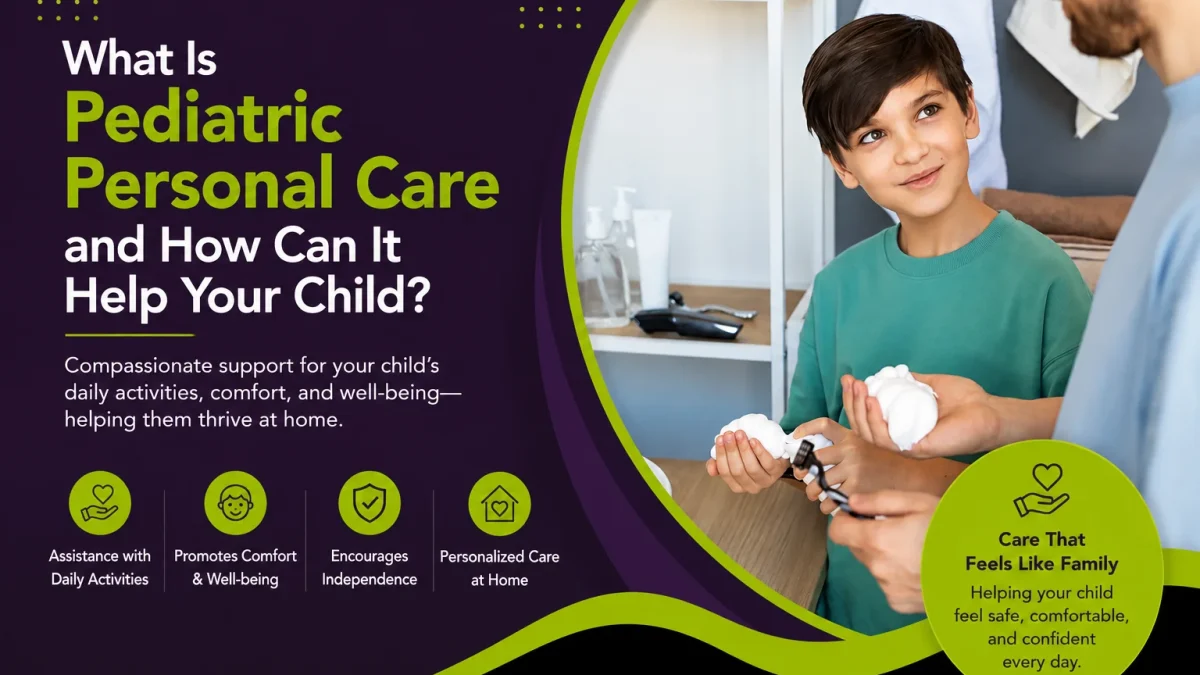
Every parent wants their child to feel safe, comfortable, confident, and supported. However, everyday activities such as bathing, dressing, grooming, toileting, eating, mobility, and personal hygiene can be challenging for a family when a child needs extra help.
Parents may need to balance work, school, home, doctor’s appointments, and their child’s personal care.
This is when pediatric personal care can make a difference. At Love One Home Healthcare, we are committed to providing compassionate, personalized care that helps children and families feel supported at home.
What Is Pediatric Personal Care?
Pediatric personal care is a home-based supportive service provided by caregivers to meet the unique personal care needs of a child.
Children have individual needs when it comes to bathing, dressing, grooming, toileting, mobility, meals, and more. With that said, a pediatric personal care plan is usually individualized to meet a child’s specific needs. Depending on a child’s approved care plan and personal care needs, a pediatric personal caregiver may:
Assist with bathing and/or showering
Provide grooming and hygiene support
Assist with dressing
Offer toileting help
Aid with mobility and transfers
Offer feeding or mealtime assistance
Provide medication reminders when approved
- Assist with safety supervision
Why Do Children Need Personal Care Assistance?
Children develop at different rates, and some children need additional support due to developmental disabilities, physical disabilities, chronic conditions, and other mobility or health-related limitations.

Developmental Disabilities
Children with developmental disabilities may need additional help with hygiene, dressing, toileting, mobility, communication-related activities, and more.
An individualized personal care plan can help a family establish a predictable routine while encouraging participation.
Physical Disabilities or Mobility Limitations
A child may need additional assistance with mobility or transfers due to a physical condition or mobility limitation.
A qualified personal caregiver can help meet the child’s specific care needs.
Chronic Health Conditions
Some chronic conditions can impact a child’s day-to-day living, mobility, or overall development.
Home-based personal care can help a child maintain his or her comfort and familiarity in the home while helping them practice daily living skills.
Recovery or Temporary Support Needs
Some children may need additional home-based assistance following a health-related issue.
The level and type of care may depend on a child’s individual needs and care plan.
What Services Are Included in Pediatric Personal Care?
A pediatric personal care plan can include a wide variety of services and supports. Care recipients often benefit from an individualized care plan based on a child’s specific needs. Some of the most common areas of support in a pediatric personal care plan include:
Bathing and Personal Hygiene
For children with mobility limitations, developmental disabilities, or other conditions, bathing can be a challenge.
A personal caregiver can assist with bathing and personal hygiene while being sensitive to a child’s specific needs and concerns.
Dressing and Grooming
A child’s morning routine may involve getting dressed, grooming, and more. Personal caregivers can assist with dressing, grooming activities, hair care, and other personal care needs. When possible, caregivers can encourage the care recipient to participate in self-grooming activities.
Toileting Assistance
Toileting can be a particularly challenging task for children who need additional physical or developmental support.
A compassionate caregiver can help a child through their toileting routine while respecting their privacy and establishing a predictable toileting schedule.
Mobility and Transfers
Children who need assistance with mobility, transfers, or positioning may benefit from a home-based personal caregiver.
Feeding and Mealtime Support
Some children need additional assistance with feeding during a mealtime.
Depending on a child’s care needs and care plan, a personal caregiver can provide the appropriate mealtime support and encouragement to participate in daily mealtime routines.
Safety Supervision
Children who need additional assistance often benefit from having a reliable caregiver to help supervise them during everyday tasks.
A compassionate caregiver can help create a safer routine by being attentive to possible safety issues and following appropriate safety protocols.
How Can Pediatric Personal Care Help Your Child?
1. Encourage greater independence
Personal care assistance doesn’t always mean a caregiver will do everything for a child. An individualized personal care plan can help encourage a child to participate in activities they are capable of doing.
Even small successes, such as getting dressed or brushing their teeth can help boost a child’s confidence and sense of accomplishment.
2. Respect a child's dignity and privacy
When it comes to bathing, toileting, dressing, and other personal care tasks, children often feel that these are very private matters. In a pediatric personal care plan, confidentiality and communication are of utmost importance. A compassionate caregiver will understand a child’s communication needs and offer appropriate care and support.
3. Offer a comforting daily routine
Many children thrive on a predictable daily schedule. Having a reliable caregiver to help with morning routines, hygiene, toileting, meals, school preparation, and evening routines can help bring comfort and routine to a child.
4. Offer additional support for parents and guardians
As parents, we want to do everything we can for our children. However, a personal care plan can offer additional support for parents and guardians.
Knowing that their child has reliable personal care assistance can give parents and guardians additional peace of mind.
5. Provide assistance in a familiar environment
For many families, having reliable personal care assistance in the home is often a preferred option compared with traveling to a healthcare facility for non-medical care services.
In a home-based personal care plan, the care recipient can be surrounded by familiar people, objects, and environments.
How Does a Pediatric Personal Care Plan Work?
A personal care plan for a child should be individualized to meet the specific care needs of the child. Here is an overview of the standard care planning process:
Step 1: Learn about the child
The care team learns about the child’s abilities and limitations related to their care needs.
Step 2: Identify areas of support
The family and the caregivers identify the care needs and activities that require assistance, such as bathing, dressing, toileting, grooming, mobility, meals, or safety supervision.
Step 3: Establish the care plan
The care plan is created based on the child’s care needs and any applicable requirements.
Step 4: Deliver the care plan
The personal caregiver delivers the care plan while communicating appropriately with the child and his or her family.
Step 5: Adjust as needed
As a child grows and develops, their care needs may change. The care plan can be adjusted when necessary.
Pediatric Personal Care vs. Pediatric Skilled Nursing
It’s important to understand that pediatric personal care and pediatric skilled nursing are separate services. A personal care plan typically focuses on helping a child complete everyday living tasks, such as bathing or dressing. Skilled nursing refers to clinical healthcare services, such as skilled nursing care provided by licensed nursing professionals. These are two completely separate services.Some children may benefit from both personal care and skilled nursing services, depending on their unique care needs and requirements.
Families should speak with a qualified healthcare provider about their options, unique care needs, and which services may be appropriate for their child.
How to Choose Pediatric Personal Care at Home
When choosing a home healthcare provider for your child, it’s always a good idea to ask questions. Here are some important questions to ask a provider before arranging pediatric personal care at home:
Do you offer pediatric care?
What personal care services do you offer?
How do you ensure your caregivers are trained and qualified?
How is the care plan created?
- How do you communicate with parents or guardians?
How do you handle changes in my child’s care needs?
What safety procedures do you have in place?
How do you ensure the child’s privacy and dignity?
What documentation or referral requirements do you need?
Frequently Asked Questions About Pediatric Personal Care
What is pediatric personal care?
Pediatric personal care refers to home-based assistance with activities of daily living that a child might not be able to complete independently.
Depending on a child’s care needs, the personal care assistance offered to the child can include bathing, dressing, grooming, toileting, mobility, feeding, and more.
Who can benefit from pediatric personal care?
Children with developmental disabilities, physical disabilities, chronic conditions, mobility limitations, or other difficulties with activities of daily living can benefit from personal care assistance.
Depending on a child’s care needs, an individualized personal care plan can be created.
Can a child receive personal care assistance at home?
Yes. Children can receive personal care assistance at the home environment.
Home-based assistance can provide comfort and familiarity while offering additional support to families.