
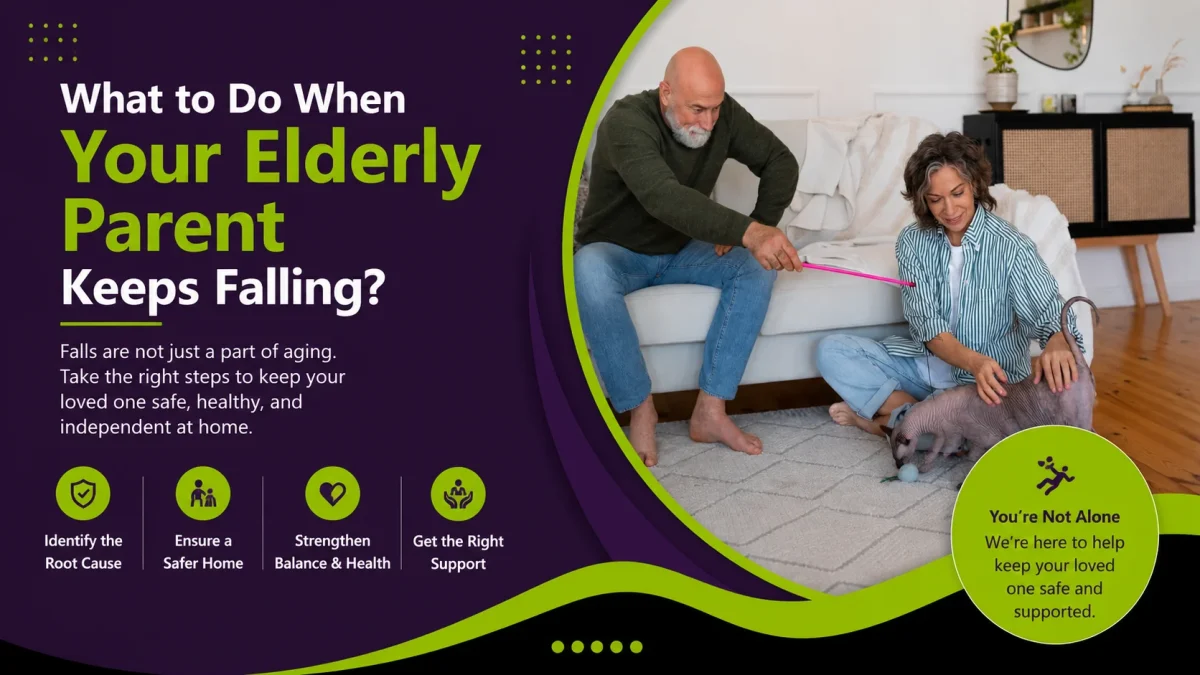
It can be frightening to watch your parents, as they get older. Although one fall might appear to be just an accidental incident, if an elderly parent continues to fall, families usually start to ask themselves some important questions: Why is this occurring? Is the house safe? Does my parents require more help? And what can we do to stop another fall?
For anyone seeking kind and caring home-based assistance, Love One Home Healthcare offers personalized care taking into account each person’s needs, daily routines, abilities, and existing care plan.
Why do elderly parents continue to fall?
Older adults may have falls for a great many different reasons, and at times several risk factors will occur together.
Seniors who do not have regular interactions have a higher risk to develop depression or depression, anxiety and cognitive decline and even chronic illnesses.
Many older adults live on their own, or live far away from relatives. Limitations in mobility can prevent them from going to social gatherings or participating in community activities.
As time passes, their isolation may slowly affect their mental health and their sense of purpose. Companionship services can fill the void by providing an ongoing human connection through conversation, interaction, and even engagement.
These connections aren’t just soothing, but they can also be life-enhancing.
Balance and Mobility Changes
Changes in muscle strength, coordination, balance, or the ability to walk can make it more difficult to carry out ordinary activities. For example, getting out of a chair, walking to the bathroom, turning around, or getting into bed may become a challenge.
Vision Problems
Failing vision can make it more difficult to see obstacles, bumps in the floor, steps, or objects in the path. Lack of lighting can make these problems even worse, especially at night.
Medication-Related Factors
Certain medications or combinations of medications might cause dizziness, drowsiness, or alterations in alertness. It is essential that families do not stop or alter prescribed medications without first obtaining professional advice.
If you think that the medication might be causing the fall, you should talk to the doctor or pharmacist who prescribed it.
Home Hazards
The home environment may as well lead to falls, with common hazards being:
- Loose rugs
- Cluttered walkways
- Electrical cords
- Poor lighting
- Slippery bathroom surfaces
- Uneven flooring
- Unsafe footwear
- Inadequate support around stairs or bathrooms
By identifying and dealing with these hazards, daily movement can be made safer.
Cognitive Changes
Individuals who have dementia or other changes in cognitive function might find it hard to spot hazards, remember safety instructions, or assess their own physical capabilities.
It may be especially helpful to have consistent routines, appropriate supervision, and an environment that is familiar and easy to navigate.
What are you supposed to do if your elderly parent falls?
It is natural for a parent to want to go ahead and help them stand when they have fallen; nevertheless, families should first think about the possibility that there may be an injury.
If you suspect that there is a serious injury, severe pain, a loss of consciousness, significant bleeding, difficulty in breathing, sudden confusion, or another emergency symptom, obtain the appropriate emergency medical help. Even if there is no clear emergency, families ought to think about getting in touch with the person’s healthcare professional, in particular if falls are occurring more and more often.
1. Stay Calm
Your parents might already be frightened or embarrassed. A calm and reassuring reply can help them feel that they are being supported rather than blamed.
2. Assess the Situation
Check for any signs of injury and for alterations in movement, alertness, communication, or behaviour. Do not move the person unless necessary if there is a possibility of a serious injury.
3. Document What Happened
Record the time and place when the fall took place, describe what your parent was doing, state whether a mobility aid was being used, and mention anything that was noticed as being unusual.
4. Look for Patterns
Where falls occur frequently when carrying out certain activities—for example, getting out of bed, going to the bathroom, or moving from a chair—then extra safety support may be needed for those activities.
How can you make the home safer?
Preventing falls is not a matter of stopping an older adult from moving; it is about making it safer for them to move in their daily lives.
Clear Walking Paths
Clear commonly used pathways of any clutter, loose objects, cords, and unnecessary furniture.
Improve Lighting
It is important that the bedrooms, bathrooms, hallways, stairways, and all other areas that are frequently used have sufficient lighting, and nightlights may be useful when moving about at night.
Improve Bathroom Safety
Bathrooms can pose a considerable risk of people falling due to the presence of water and the slippery surfaces. The kind of safety equipment needed and the necessity of assistance will depend on individual requirements and the advice of professionals.
When Should You Think About Getting Home Care?
Families might start to think about arranging home care when an older adult is finding it more and more difficult to carry out everyday activities safely.
Potential signs include:
- Repeated falls
- Difficulty walking
- Trouble getting out of bed
- Difficulty transferring from a chair
- Fear of walking independently
- Increased need for bathing assistance
- Difficulty with toileting
- Changes in memory or awareness
- Difficulty completing household tasks
- Increasing family caregiver responsibilities
An Emotional Family Story: When Margaret Started Falling
Margaret was a woman of 79 who liked to keep her independence. For many years she had resided in her house and enjoyed making simple meals, watching her favourite programmes, and sticking to her normal daily routine.
She fell as she was walking towards the bathroom.
Although her daughter was worried, she at first thought it must have been a one-off incident.
A few weeks later Margaret had another fall when rising from her chair.
This time, Margaret’s daughter noticed a important point: she had begun to grasp onto furniture as she walked and was also becoming nervous about moving around the house alone.
The family came to the conclusion that the problem was greater than a single accident.
They talked to Margaret’s healthcare professional about the frequent falls and started to look at her daily routine, mobility, and the condition of her home. They also examined the areas in which she would need extra help.
Margaret was given suitable assistance with mobility, transfers, and with the activities which had become more difficult, as a result of having a personal home care plan.
The aim was not to stop Margaret from moving.
The aim was to enable her to move in a safer way.
As time went on, Margaret grew more at ease about taking part in her usual routine, and her daughter became more confident since her mother had extra support.
An important aspect of fall prevention is that supporting independence doesn’t involve leaving a person without help; it is about achieving the correct balance between safety, dignity, and independence.
How can home care help to prevent falls?
Professional home care offers practical help with the day-to-day activities of people who have trouble carrying out certain tasks safely.
Depending on the individual’s care plan, support may include:
- Mobility assistance
- Transfer assistance
- Personal care
- Bathing support
- Toileting assistance
- Dressing assistance
- Safety supervision
- Companionship
- Support with daily routines
- Communication with authorized family members
Caregivers might also notice any changes in a person’s mobility or daily functioning and pass on the relevant concerns to the appropriate family members or to the established care team.
Home care does not take the place of a medical evaluation, diagnosis, or treatment; rather, suitable home-based support can act as a complement to a person’s existing healthcare plan.
Fall Prevention for Seniors in Greenbelt
Families in Greenbelt who are worried about the number of falls they have experienced might find it helpful to consider both their immediate safety requirements and the more long-term kind of support.
In Greenbelt fall prevention measures could involve providing information on home safety, offering help with mobility, giving support when transferring from one place to another, providing supervision, educating carers, and establishing individual daily routines. Love One Home Healthcare adopts a person-centered approach by concentrating on the individual’s abilities, preferences, daily routine, and care needs.We offer a range of services such as Companion Services, Personal Care, Skilled Care, Live-In Care, Pediatric Care, Home Infusion Therapy Service, Physical and Speech Therapy, Healthcare Staffing Service, and Healthcare Training.
If families want to talk about the needs of their loved ones and find out about the home care options available, they can get in touch with Love One Home Healthcare.
Frequently Asked Questions
Is it normal for people to fall as they age?
Falls should not be regarded as an inevitable aspect of getting older. There can be a number of reasons why repeated falls occur, such as changes in mobility, vision difficulties, the effects of medications, cognitive changes, and hazards in the environment. Families should talk to a suitable healthcare professional about frequent falls.
What are my options if the parent continues to fall?
Take repeated falls seriously and get a proper medical evaluation; look at any possible safety hazards, talk over any medication concerns with a healthcare professional, and consider whether it might be appropriate to get extra help with daily activities or with mobility.
What can I do to make my parents' home safer?
Begin by clearing the walking paths, enhancing the lighting, looking after bathroom safety, fastening the loose rugs and cords, and making sure that items which are often used are easy to access.
Can home care be of any help to an elderly parent who keeps falling?
Home care can offer help with mobility, transfers, personal care, supervision, and the management of daily routines.
Does dementia increase a person's risk of falling?
The cognitive changes linked to dementia can influence a person’s judgment, level of awareness, orientation, and capacity to recognize hazards.