
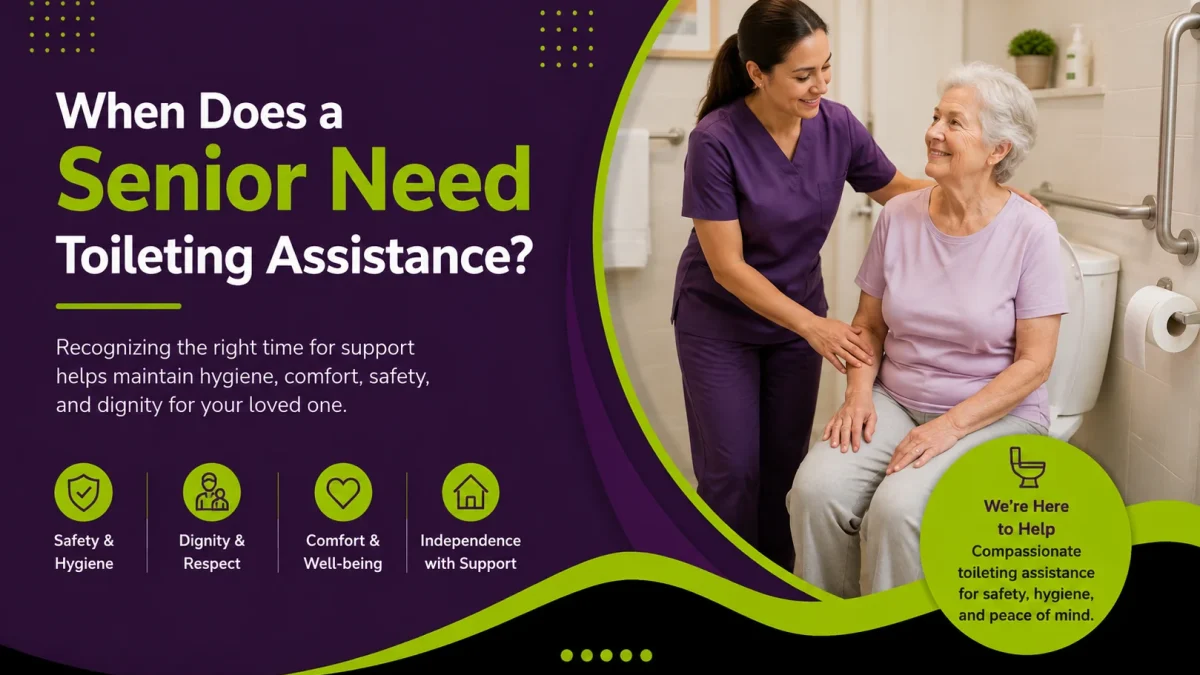
For many seniors, toileting is one of the most personal care issues. A capable senior used to being able to do everything independently now may require help with a process that they never needed assistance with before.
When does a senior need toileting assistance?
While family members may be tempted to provide assistance just because their parent is getting older, senior toileting help is necessary for those who have issues related to mobility, control, illness, weakness, and the risk of falls.
The National Institute on Aging (NIA)
notes that taking care of personal needs is an essential activity of daily living that may require the aid of a family member, friend, or professional caregiver.
Love One Home Healthcare understands the importance of toileting assistance, which is why our team of caregivers offers toilet training, toileting assistance, and other personal care services for seniors.
Overview of Senior Toileting Assistance

• Walking or transferring to the bathroom
• Sitting down or standing up
• Managing clothing
• Hygiene
• Using continence products
• Establishing a toileting routine
• Cleaning
When Does a Senior Need Toileting Assistance?
While there is no cut-and-dry answer as to when seniors need toileting assistance, the following reasons can indicate that an older adult may require help with personal care activities related to using the bathroom.
1. Difficulty Walking to the Bathroom
An older adult may be able to think clearly and have the mental capacity to handle the responsibilities of using the restroom but may have a physical disability that prevents them from walking to the bathroom.
2. Problems Sitting Down or Standing Up From the Toilet
The act of sitting down or standing up requires seniors to have strong core muscles and good balance and coordination, so a senior who finds these tasks difficult may need help with transfers and toileting.
The act of eating together transforms meals into social occasions increasing appetite and nutrient intake.
3. History of Falls or Risk of Falls
CDC notes that more than 1 in 4 adults age 65 and older fall each year, and many of these falls can lead to injuries and impact a senior’s ability to live independently.
Bathroom activities such as sitting down or standing up from the toilet can raise the risk of falls for seniors
4. Incontinence
Many families face the issue of incontinence as their loved one ages.
An older adult with bladder or bowel incontinence may:
- Leak urine or feces
- Experience sudden urges to use the bathroom
- Frequently need to go to the bathroom
- Have difficulty reaching the bathroom in time
- Accidentally soil themselves or their clothes
- Require more continence products
5. Difficulty Managing Clothing
Most seniors can manage their clothing easily, but an older adult with dexterity problems may struggle with fasteners and zippers.
They may also have issues putting on, taking off, or putting on undergarments, underwear, and other protective clothing.
Arthritis, weakness, tremors, pain, and limited range of motion can all contribute to clothing management problems.
Some seniors may need help with clothing while others may only require partial assistance.
6. Poor Hygiene
Another indication that a senior may require toileting assistance is a sudden change in bathroom hygiene.
A family caregiver should take note if a senior:
- Does not clean themselves properly
- Struggles to wash their hands
- Leaves the bathroom dirty
- Has accidents
- Changes clothes infrequently
- Has an odor
- Needs reminders to use the bathroom
Poor hygiene can also be a sign of an underlying health issue that may require medical attention.
7. Memory Loss Issues or Cognitive Impairment
As seniors age, they may develop dementia and other cognitive impairments that can make using the bathroom more difficult.
Those with dementia may:
- Forget where the bathroom is
- Forget to use the bathroom
- Become confused at night
- Wear the wrong type of clothing
- Require reminders to go to the bathroom
- Become embarrassed about accidents
Seniors with memory loss or dementia may benefit from having a consistent toileting routine.
Seniors may find it challenging to get to the bathroom at night.
They may wake up groggy, have trouble seeing, or feel lightheaded when they stand up.
Families should consider whether nighttime toileting assistance is necessary for their loved one if they:
- Wake up to go to the bathroom frequently
- Have fallen at night
- Used furniture to help them get to the bathroom
- Become confused at night
- Have trouble walking to the bathroom
- Cannot see the toilet clearly at night
How Toileting Assistance Can Help Prevent Falls
CDC recommends practical steps for preventing falls at home for seniors, including making sure the home environment is as fall-proof as possible.
As part of senior toileting assistance, caregivers can work on ensuring that their loved one can safely use the bathroom, which includes removing obstacles, adding lighting, and installing grab bars.
Caregivers can install grab bars in the bathroom and other areas around the home, especially near the toilet, as these reduce the risk of accidents and give seniors something to lean on if they need support.
- Adding lighting so that the senior can see clearly
- Using night lights in the bathroom and other areas so that the loved one can see without stumbling
- Removing area rugs or other throw rugs from the floor that can cause slips
- Keeping the home clear of clutter
- Making sure that furniture and other objects are placed so that the loved one can move freely
- Getting the right mobility equipment so that the senior can walk around the home safely
- Installing nonslip surfaces in the bathroom and other slippery areas
- Keeping frequently used items within easy reach
- Clearing a path from the senior’s bedroom to the bathroom so that it is easy to navigate
A caregiver can also provide physical assistance with walking and other tasks as needed.
Why Bathroom Safety Matters
While it may seem like a minor issue, a fall can be devastating for an older adult and cause lasting harm.
The
CDC reports that falls are the leading cause of injury and death among older Americans, with there being more than 43,000 fall deaths among people ages 65 and older in 2024 and more than 4.5 million emergency room visits due to falls.
How Caregivers Can Provide Toileting Assistance Respectfully
Because toileting assistance is such an intimate activity, the caregiver should take extra precautions to make the experience as comfortable and respectful as possible for the senior.
Ways for caregivers to provide toilets assistance respectfully include:
Privacy
Caregivers should close the bathroom door and any other windows or blinds as necessary and only expose the areas that the senior needs help with.
Independence
A senior should be encouraged to do as much as they can on their own.
A caregiver can assist with walking to the bathroom but allow the loved one to manage their clothing if they are capable.
Communication
Before doing any task, a caregiver should inform the senior of what they plan to do to help avoid embarrassing or frightening them.
Consistency
Some seniors require a consistent toileting schedule, especially those with memory loss or dementia.
Calmness
Urine or bowel accidents can be embarrassing for seniors, so a caregiver should remain calm and not make a big deal out of the situation.
When Should Families Hire Professional Toileting Assistance?
Families can hire professional toileting assistance if their loved one:
- Needs help using the bathroom on a daily basis
- Has frequent accidents
- Has fallen or is at risk of falling
- Needs help sitting down or standing up from the toilet
- Cannot walk to the bathroom safely
- Needs help at night and cannot be supervised by a family member
- Has dementia or memory loss
- Has poor hygiene
- Is becoming increasingly dependent on family caregivers
- Becomes afraid to be alone
The
NIA notes that professional caregivers can assist older adults with personal care activities, including toileting, and provide help with mobility.
Companion Services
Companion care can be a great option for seniors who need help with toileting assistance as a caregiver can help them with their daily routine while also providing companionship to prevent loneliness.
Personal Care
Personal care services can help seniors with activities of daily living (ADLs), including toileting assistance.
Skilled Care
Skilled care may be necessary for seniors who have skilled medical needs that require care from a professional healthcare worker.
Live-in Care
For seniors who need more round-the-clock assistance, live-in care can provide caregivers who can help with toileting and other tasks.
Love One Home Healthcare offers Companion Services, Personal Care, Skilled Care, Live-in Care, Pediatric Care, Home Infusion Therapy Service, Physical & Speech Therapy, Healthcare Staffing Service, and Healthcare Training.
How Family Caregivers Can Talk to Seniors About Toileting Assistance
How family caregivers talk to seniors about toileting assistance is just as important as determining whether a loved one needs additional help.
Instead of bluntly stating, “You can no longer take care of yourself,” try asking gentle questions to help determine whether a senior needs additional help with toileting.
For example, a family caregiver might ask their loved one, “I’ve noticed you seem to have more trouble getting to the bathroom lately. How are you feeling about it?” Then, listen to what the elder has to say.
It is essential that the family caregiver tries to put themselves in the senior’s shoes and understand how the older adult is feeling instead of immediately deciding that they need additional assistance.
Furthermore, they should explain that the intention is to help their loved one stay safe and independent, not take away their autonomy.