
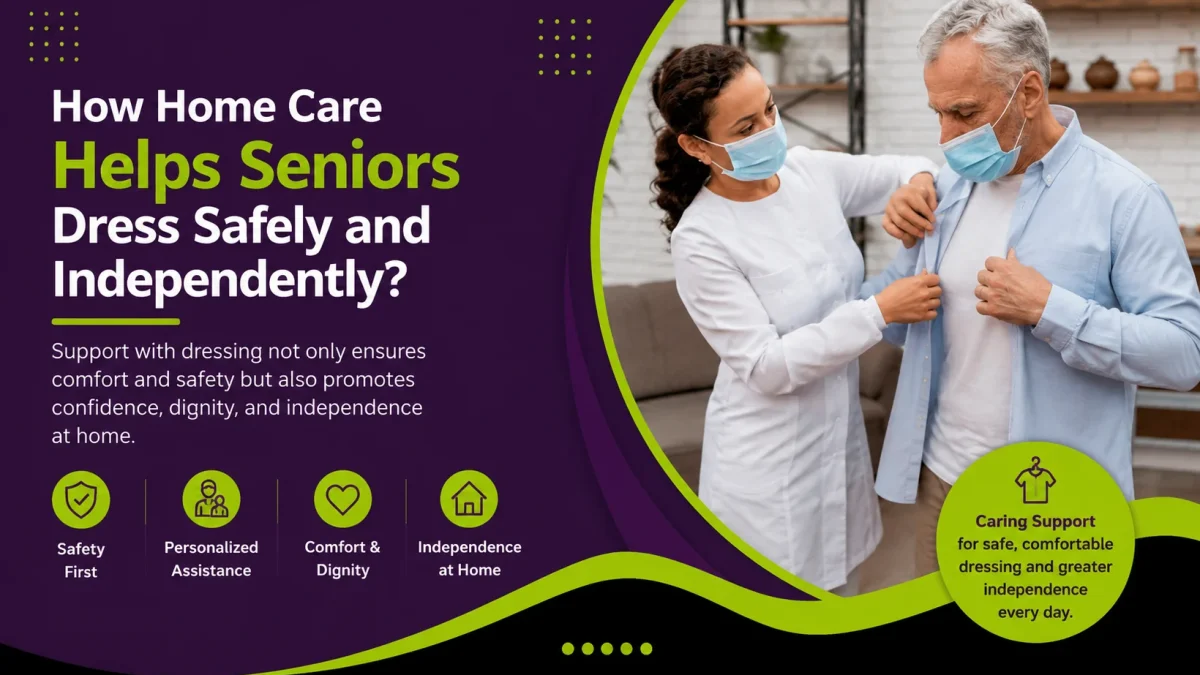
How Home Care Helps Seniors Dress Safely and Independently?
Getting dressed is something many people do without thinking about it. For seniors, however, a simple morning routine can sometimes become challenging. Limited mobility, weakness, balance difficulties, arthritis, changes in coordination, or recovery from an illness or injury can make putting on clothes more difficult.
What once took a few minutes may begin to require extra time, effort, and assistance.
This is where professional home care can make a meaningful difference.
At Love One Home Healthcare, we understand that dressing is about more than putting on clothes. It can be connected to dignity, confidence, comfort, personal choice, and independence. With appropriate senior dressing assistance, an older adult can receive the support they need while continuing to participate in their daily routine as much as possible.
In this guide, we explore how home care can help seniors dress more safely and independently and how personalized support can make everyday life easier at home.
Why Dressing Can Become Difficult for Seniors
Dressing involves several physical and cognitive activities. A person may need to stand, sit, bend, reach, balance, coordinate their hands, and remember the sequence of different clothing tasks.
As people age, changes in physical ability can make some of these activities harder.
Common challenges may include:
- Reduced strength or flexibility
- Arthritis or joint stiffness
- Limited range of motion
- Balance difficulties
- Reduced hand strength
- Difficulty with buttons, zippers, and fasteners
- Trouble bending down to put on shoes
- Difficulty reaching overhead
- Mobility limitations
- Recovery after surgery or injury
- Physical disabilities
- Changes associated with neurological conditions
- General fatigue or weakness
These challenges do not necessarily mean that a senior should stop doing things independently. Instead, the right level of assistance with dressing can help them safely participate in the activities they are still able to manage.
How Home Care Supports Senior Dressing
Home care can provide practical support while preserving the senior’s dignity and personal choices.
A caregiver does not always need to complete the entire dressing routine. In many situations, the goal is to provide help only where it is needed.
For example, a senior may be able to choose their clothes and put on a shirt independently but need help fastening buttons or putting on shoes.
This approach can support independence while reducing unnecessary physical strain.
1. Helping Seniors Choose Appropriate Clothing
Choosing clothing can become difficult when a senior has limited mobility or needs to consider comfort and ease of movement.
A caregiver can provide gentle support with organizing clothing and preparing appropriate options for the day.
Clothing choices may take into account:
- Weather
- Comfort
- Personal preferences
- Daily activities
- Ease of movement
- Footwear needs
- Adaptive clothing options
The senior should remain involved in decisions whenever possible. Personal clothing preferences are an important part of maintaining independence and identity.
2. Providing Hands-On Dressing Help
Some seniors need physical assistance with putting on or removing clothing.
Caregivers can provide dressing help with tasks such as:
- Putting on shirts and sweaters
- Pulling up pants
- Managing sleeves
- Changing clothing
- Putting on socks
- Managing footwear
- Fastening buttons
- Opening and closing zippers
- Managing other clothing fasteners
The level of assistance can be adjusted according to the person’s abilities and established care plan.
The goal is not simply to complete the task quickly. It is to help the individual complete their routine safely and comfortably.
Supporting Independence During Dressing
One of the most important principles of senior home care is encouraging independence whenever it is safe and appropriate.
Let Seniors Do What They Can
If an older adult can put on their shirt independently, there may be no reason for a caregiver to do it for them.
Instead, the caregiver can provide support with the part of the task that is difficult.
For example:
Senior: Chooses their outfit and puts on their shirt.
Caregiver: Helps with difficult buttons and footwear.
This approach allows the senior to remain involved in their own care.
Why Independence Matters
Maintaining participation in everyday activities can help seniors feel more confident and in control of their routines.
Dressing may seem like a small task, but being able to make choices and participate in personal care can have emotional importance.
A respectful caregiver can provide encouragement without making the senior feel incapable.
Dressing Aids and Adaptive Clothing for Seniors
Sometimes the right equipment or clothing can make dressing easier.
Dressing aids are tools or adaptive products designed to help people manage clothing tasks when reaching, bending, gripping, or fastening is difficult.
Depending on individual needs, examples may include:
- Long-handled shoehorns
- Button hooks
- Zipper pulls
- Sock aids
- Elastic shoelaces
- Reacher tools
- Easy-fastening clothing
- Velcro-style closures
- Adaptive pants
- Front-opening shirts
Adaptive clothing may also reduce the physical effort required for dressing.
However, the appropriate dressing aid depends on the person’s abilities and circumstances. Families should consider professional guidance when safety or mobility concerns are involved.
How Caregivers Promote Safer Dressing
Dressing can sometimes involve standing, transferring, bending, or reaching. For a senior with balance or mobility difficulties, these movements may increase the risk of losing balance.
A caregiver can help make the routine more manageable by following the individual’s established care plan and supporting safer positioning.
Sitting During Dressing
When appropriate, dressing while seated can reduce unnecessary standing and bending.
A caregiver may help the individual organize clothing so that items are within comfortable reach.
Organizing Clothing Beforehand
Having clothing prepared before dressing begins can make the process more organized.
A caregiver may help arrange:
- Undergarments
- Shirt or top
- Pants or skirt
- Socks
- Shoes
- Outerwear
The exact order can be adjusted to the person’s normal routine.
Allowing Enough Time
Rushing can make daily care stressful.
A patient approach allows the senior to complete the parts of the dressing routine they can safely manage while receiving assistance when needed.
Senior Dressing Assistance and Activities of Daily Living
Dressing is commonly considered one of the basic activities of daily living, often referred to as ADLs.
Other personal care activities can include:
- Bathing
- Grooming
- Toileting
- Eating
- Personal hygiene
- Mobility
- Transferring
When a senior begins experiencing difficulty with multiple daily activities, a broader personal care plan may be appropriate.
Bathing and Dressing Support
Some individuals may need help with both bathing and dressing.
These services can be coordinated as part of a personalized home care routine while respecting privacy, preferences, and dignity.
For example, a morning routine might include:
- Assistance preparing for bathing
- Bathing support when included in the care plan
- Grooming and hygiene
- Assistance selecting clothing
- Dressing support
- Footwear assistance
- Preparation for the day’s activities
A consistent routine can make mornings feel more predictable and manageable.
A Simple Story: When Getting Dressed Became Difficult
Consider an older woman named Margaret.
For most of her life, Margaret had started every morning the same way. She would open her closet, choose an outfit, get dressed, and sit down for breakfast.
After experiencing increasing stiffness and weakness, mornings began to change.
Buttons became frustrating. Pulling on pants required more effort. Putting on shoes meant bending farther than she felt comfortable doing.
Her family noticed that she was beginning to avoid certain clothes because they were difficult to manage.
Instead of taking over her entire morning routine, her caregiver focused on providing support where Margaret needed it most.
Margaret continued choosing her clothes.
She continued putting on the garments she could manage.
Her caregiver helped with difficult fasteners, footwear, and other challenging parts of the routine.
That small change made a meaningful difference.
Margaret did not feel that her morning routine had been taken away from her. She still made choices and participated in getting ready.
She simply had help with the parts that had become difficult.
This is the value of person-centered home care: supporting independence without ignoring the need for assistance.
Signs a Senior May Need Dressing Assistance
Families may notice several signs that an older adult could benefit from additional support.
These may include:
- Taking much longer than usual to get dressed
- Frequently struggling with buttons or zippers
- Avoiding certain clothing
- Having difficulty putting on shoes
- Becoming tired during dressing
- Needing help bending or reaching
- Losing balance while dressing
- Wearing inappropriate clothing for the weather
- Becoming frustrated during the morning routine
- Asking family members for frequent dressing assistance
One sign alone does not necessarily mean professional care is required. However, a noticeable or ongoing change in daily functioning may be worth discussing with an appropriate healthcare professional.
What Makes Personalized Home Care Different?
Every senior has different abilities, preferences, routines, and goals.
That is why effective home care should not follow a one-size-fits-all approach.
Individualized Care Plans
A personalized care plan can identify:
- What tasks the individual can complete independently
- Where assistance is needed
- Preferred daily routines
- Clothing preferences
- Mobility considerations
- Safety concerns
- Appropriate adaptive equipment
- Communication preferences
- Family or care team coordination needs
The plan can be adjusted as needs change.
Respect for Privacy and Dignity
Dressing is a personal activity.
Professional caregivers should approach personal care with respect, appropriate privacy, and sensitivity.
Simple actions—such as explaining what assistance is being provided, allowing choices, and giving the person time—can make the experience more comfortable.
Benefits of Home-Based Dressing Assistance
Receiving support at home can offer several practical benefits.
Greater Comfort
Seniors can receive assistance in a familiar environment surrounded by their personal belongings and established routines.
Support for Independence
Caregivers can assist with difficult tasks while encouraging seniors to complete what they can safely manage.
Reduced Family Caregiver Pressure
Family members may feel less pressure when a trained caregiver provides appropriate support with daily personal care tasks.
More Consistent Routines
Regular support can help create predictable morning and evening routines.
Personalized Attention
Home care allows support to be centered around the individual’s specific needs rather than a generalized routine.
When Should Families Consider Home Care?
Families may want to explore home care when daily activities are becoming consistently difficult or when caregiving responsibilities are becoming challenging to manage.
A conversation with a qualified healthcare professional may also be appropriate when there are significant changes in mobility, strength, balance, or daily functioning.
Home care can then be considered as part of a broader support plan when appropriate.
Why Choose Love One Home Healthcare?
At Love One Home Healthcare, we believe personal care should be centered around the person receiving it.
Our caregivers can provide support with daily routines while respecting individual preferences, dignity, and independence.
Our services include:
- Companion Services
- Personal Care
- Skilled Care
- Live-In Care
- Pediatric Care
- Home Infusion Therapy Service
- Physical & Speech Therapy
- Healthcare Staffing Service
- Healthcare Training
Our approach is designed to help individuals and families navigate daily care with dependable, person-centered support.
Frequently Asked Questions About Senior Dressing Assistance
How can home care help seniors dress independently?
Home caregivers can assist with difficult parts of dressing while encouraging seniors to complete the tasks they can safely manage. This may include clothing selection, fasteners, footwear, or changing clothes.
What does assistance with dressing include?
Assistance may include putting on and removing clothing, managing buttons and zippers, organizing clothes, helping with socks and shoes, and supporting established dressing routines.
Are dressing aids useful for older adults?
Dressing aids can make certain tasks easier for seniors who have difficulty reaching, bending, gripping, or fastening clothing. The appropriate aid depends on the individual’s abilities and needs.
Can dressing support be part of personal care?
Yes. Dressing can be included as part of a broader personal care plan when an individual needs support with activities of daily living.